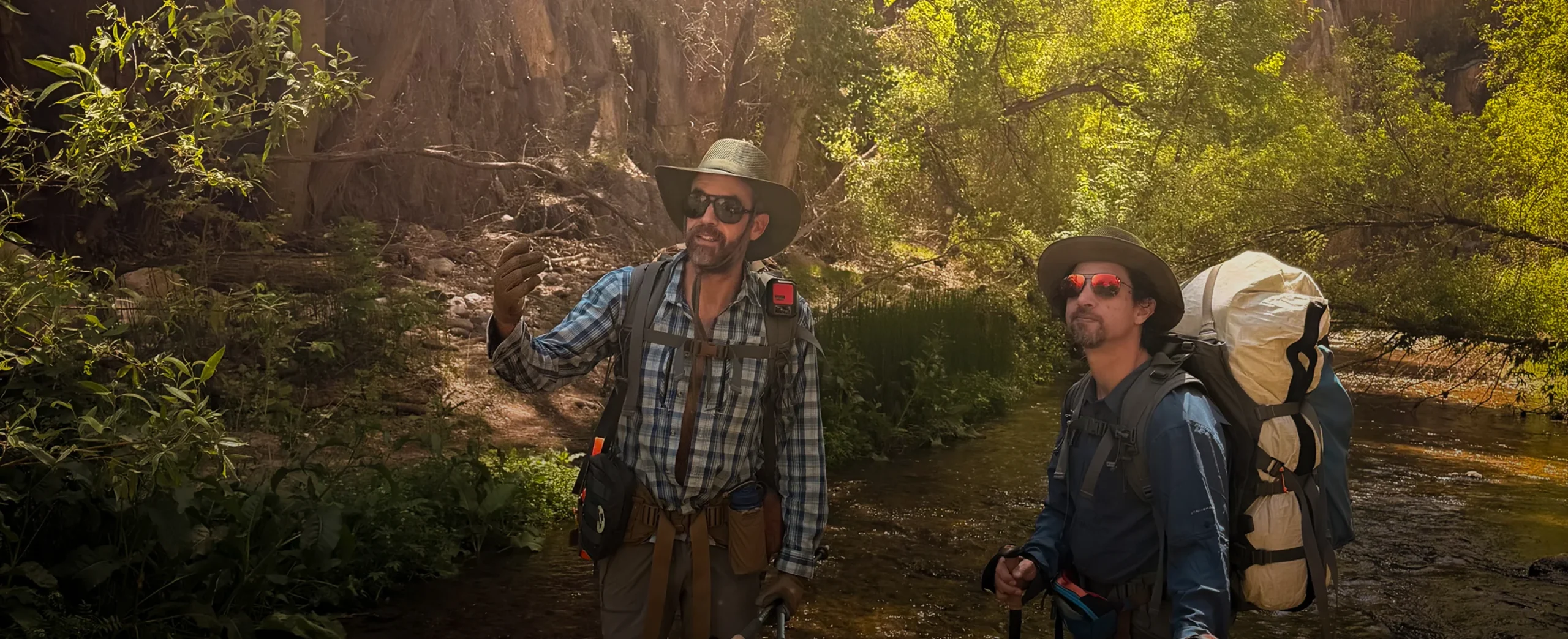
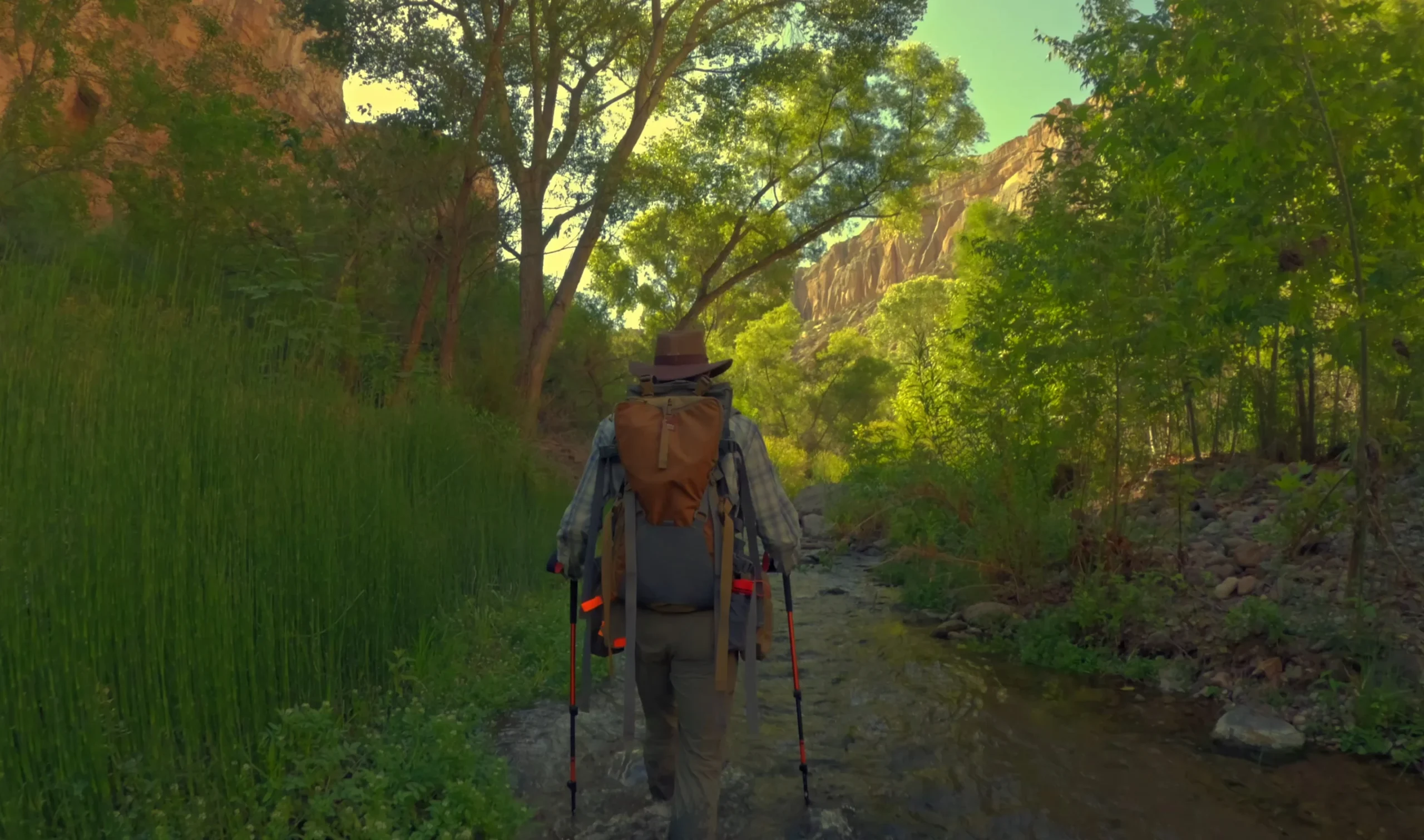
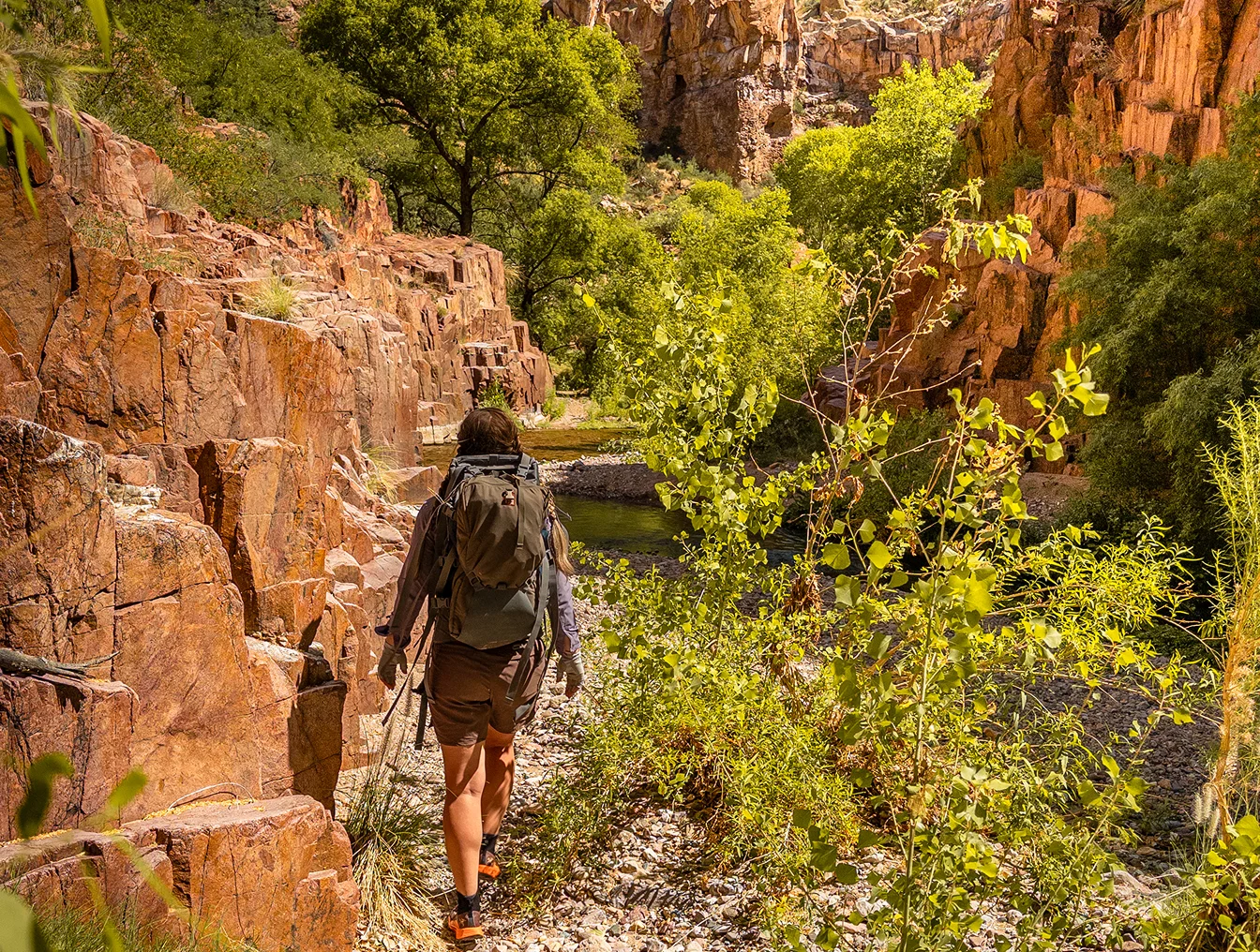
Yes. Aravaipa Creek flows year-round, and you can generally rely on it as your water source while hiking or backpacking in the canyon.
You should treat the water before drinking it.
In our experience, water management in Aravaipa is very easy. In fact, we generally don’t carry water at all while we’re hiking. When we’re thirsty, we stop at the creek and make drinking water.
What you need to know about drinking water in Aravaipa
- There is water throughout the canyon. Aravaipa Creek is perennial and flows year-round.
- We treat all creek water before drinking it.
- The water is usually easy to treat. We have treated water from Aravaipa hundreds of times and have rarely found turbidity to be much of a problem.
- The creek can become muddy after storms or flooding. This isn’t the normal condition, but it’s worth considering if significant rain is expected.
- You don’t necessarily need to carry much water. Because you’re walking alongside—or often directly in—the creek for much of the trip, opportunities to make more water are frequent.
How we treat water while hiking
We don’t normally hike through Aravaipa carrying liters of drinking water.
Instead, when we’re ready for a drink, we stop and make some.
We carry a Nalgene bottle and place a fine mesh cloth over the opening while filling it from the creek. The cloth strains out sand, plant material and other visible debris.
We then treat the water in the Nalgene with a Steripen UV purifier.
The whole process only takes a couple of minutes, so we generally find it more convenient to make water as we need it rather than carrying several pounds of water through the canyon.
How we filter water at camp
At camp, we use a different system.
We use a Sawyer filter with two CNOC bladders—one for untreated water and one for clean water—and hang the system from a tree.
Gravity does the work for us, so we can fill the bladder, hang it up and let water slowly filter while we’re setting up camp, cooking or doing something else.
We still UV-treat our drinking water afterward.
It’s a simple system and gives us plenty of water for drinking, dinner and the following morning without spending much time actively pumping or squeezing a filter.
One small detail we think matters: the bottle cap
We use HumanGear capCAPs on our Nalgenes. They replace the standard wide-mouth Nalgene lid with a smaller drinking opening. HumanGear describes the current capCAP+ as a drinking spout designed for wide-mouth bottles, including compatible Nalgenes.
There’s a water-treatment reason we like them.
When you dip or fill a Nalgene with untreated creek water, some untreated water inevitably remains around the outside of the bottle and its threads. Treating the water inside the bottle doesn’t treat that water.
With a normal Nalgene lid, you drink from essentially the same area that was exposed to untreated creek water.
With the capCAP, your mouth goes on the smaller drinking spout instead of the wet bottle threads.
What about muddy water?
We’ve made water in Aravaipa many times and have never personally encountered creek water that was particularly difficult to filter.
If the water is unusually silty, we’d simply look for the clearest water available, let sediment settle if necessary, and use a proper filter rather than putting a lot of sediment directly into our drinking bottle.
If major rain or flooding is expected, it also makes sense to make some extra water while the creek is still clear.
The simple version
Water is one of the easier parts of an Aravaipa trip.
The creek flows year-round, and because you’re rarely far from it, you don’t necessarily need to spend the day carrying several liters of water.
We make water when we want to drink.
While hiking, we strain creek water into a Nalgene and UV-treat it with a Steripen. At camp, we gravity-filter it through a Sawyer and then UV-treat our drinking water.
And because untreated creek water can remain on the threads of the bottle, we use a capCAP so we’re drinking from a clean spout rather than directly from those threads.